

For a long time, mobility was treated as a phase.
Something you did when you were young.
Something you did when you retired.
Something you did when things went wrong and you were “between” real lives.
That framing is no longer true.
A growing number of people are choosing – or being forced – to live outside permanent residential real estate. Not because they are irresponsible, broken, or hiding from society, but because the math no longer works. Rents are not coming down. Incomes are not going up. And spending more than half your life’s energy just to stay indoors is a bad bargain.
We are not a rounding error.
We are not a temporary problem.
We are a permanent demographic.
And that changes everything.
This Is Not About Hiding
There is a common assumption that people living in vehicles, RVs, boats, or other mobile dwellings are primarily concerned with staying invisible. With avoiding enforcement. With slipping through cracks.
That assumption comes from an older reality.
As this population grows, invisibility stops being viable – and stops being desirable. Jurisdictions will adapt not out of compassion, but out of necessity. Laws will change. Policies will be rewritten. Infrastructure will follow population, as it always does.
This is not about evasion.
It is about legitimacy.
It is about coordination, representation, and agency for people who live differently but participate fully in work, commerce, and community.
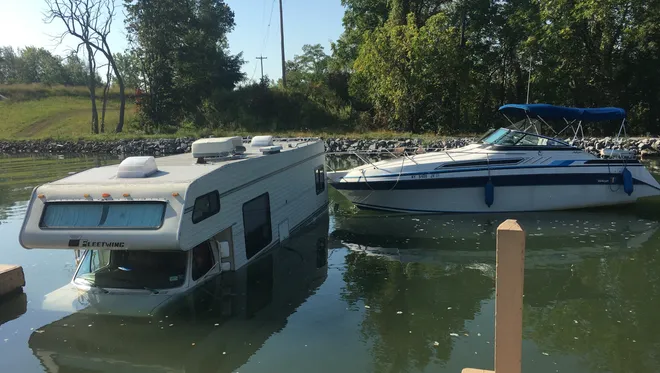
A Yacht Is Just Another RV on the Water
Mobility is not defined by income.
It is defined by non-fixed habitation.
A van, an RV, a boat, a car – these are not lifestyles. They are modalities. Different ways of solving the same problem: how to live without tying your existence to a single parcel of land.
Historically, organizations like Escapees represented a legally clean, mostly retired population operating within well-understood systems. That world is changing. The new mobile population is broader, younger, more economically diverse, and far more integrated into modern work.
The common thread is not wealth or scarcity.
It is the decision to live outside the permanent housing market.
What Elonara Is (and Is Not)
Elonara is not a social network.
It is not a lifestyle brand.
It is not a safety net.
And it is not a referee.
Elonara is infrastructure.
We provide tools for people to organize themselves: communities, events, conversations, commerce, and payment rails. We do not tell members how to behave. We do not police tone. We do not adjudicate disputes. We do not insert ourselves into transactions.
Stripe already knows how to handle money disputes better than we ever could. Social friction is handled socially, the way it has always been handled in real communities: through boundaries, reputation, and exit.
If someone annoys you, you block them.
If a community doesn’t fit, you leave.
If someone behaves badly, people stop listening.
We trust adults to manage their own boundaries.
Circles, Not Feeds
Modern platforms optimize for attention.
Elonara optimizes for relevance.
Circles filter noise.
Communities provide context.
Events create moments of coordination.
There is no algorithmic feed deciding what matters. There is no invisible hand shaping behavior. What you see is determined by who you trust and where you choose to participate.
This mirrors how real life works.
Shared Prosperity, Not Extraction
Commerce is not something we quarantine or hide. It happens everywhere people interact. In conversations. In recommendations. In events. In opportunities that arise naturally when people know each other.
There is no “seller class” on Elonara.
There are members.
Any full member can host paid events. Any full member can offer goods or services. We give them the tools because prosperity inside the network strengthens the network itself.
We take a cut when value is created, not when attention is harvested. Paid events are paid because real gatherings have real costs. If members prosper, the platform prospers with them.
That is not exploitation.
That is alignment.
We Provide Tools, Not Rules
Elonara does not decide what is acceptable speech.
We do not decide what commerce is appropriate.
We do not decide which disputes matter.
We build the table.
Members decide how to use it.
That choice will repel people who expect platforms to act as parents, moderators, or moral authorities. It will attract people who want autonomy, responsibility, and real participation instead of performative engagement.
We are comfortable with that tradeoff.
This Is a Civic Shift, Not a Trend
What is emerging is not a subculture. It is a new civic identity: people who live mobile lives and expect to be treated as legitimate participants in society.
They work.
They pay taxes.
They organize.
They trade.
They gather.
They are not going away.
Elonara exists to help them do that – openly, honestly, and on their own terms.
No feeds.
No babysitting.
No extraction.
Just tools, trust, and shared prosperity.
Leave a Reply
You must be logged in to post a comment.